Ask any Chinese learner what frustrates them most, and the answer is almost always: characters that look the same.
It's not the complex characters with 20 strokes that cause problems — it's the simple ones that differ by a single pixel:
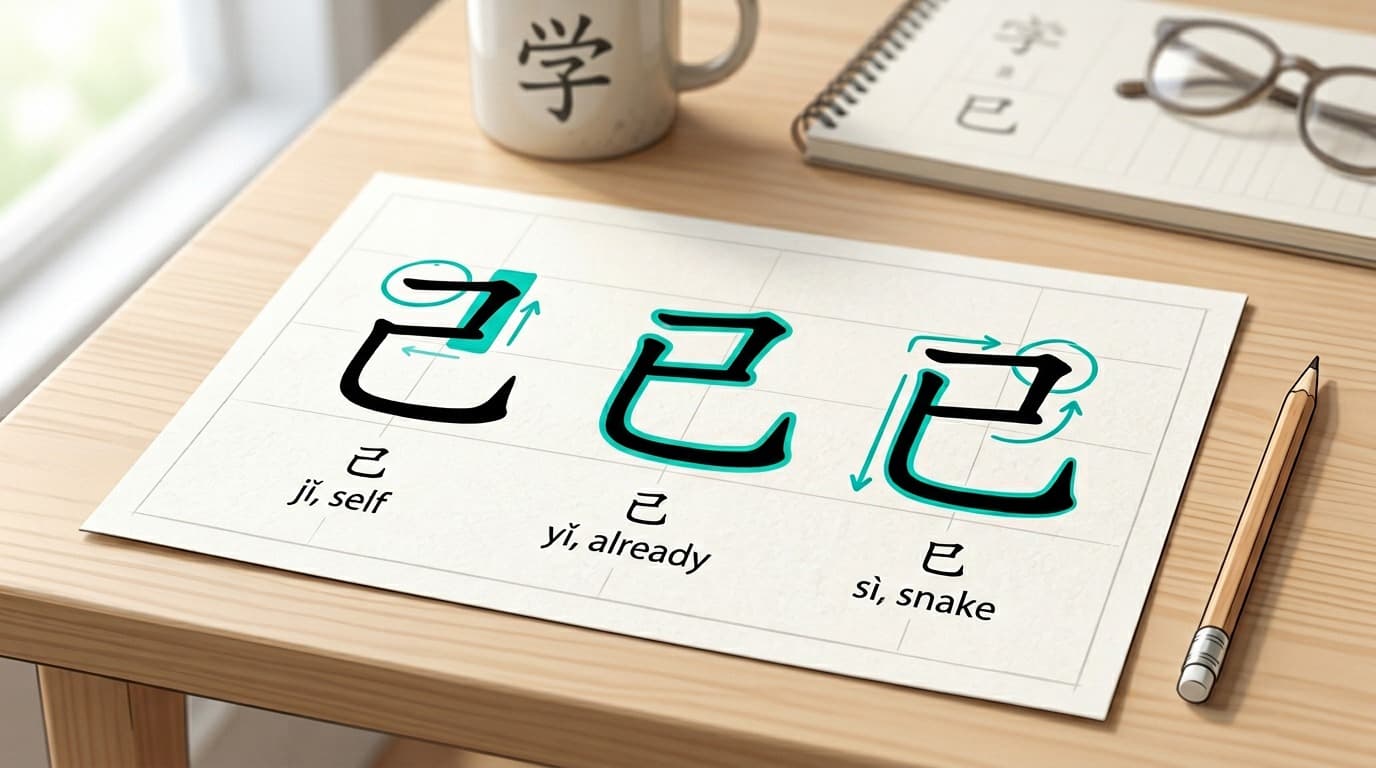
- 己 (jǐ, self) vs 已 (yǐ, already) vs 巳 (sì, sixth earthly branch)
- 学 (xué, study) vs 字 (zì, character)
- 上 (shàng, up) vs 下 (xià, down) — fine, but 上 vs 止 (zhǐ, stop)?
- 大 (dà, big) vs 太 (tài, too much) vs 犬 (quǎn, dog)
These aren't rare characters. They're among the most common in the language. And when you learn them weeks or months apart in a traditional course, you never build the mental contrast needed to tell them apart.
The Problem with Learning Characters in Isolation
Most courses introduce characters one at a time, in the order of their textbook. You learn 学 in week 2 and 字 in week 6. By the time you see 字, you've forgotten what made 学 distinctive.
This is like learning to distinguish dog breeds by seeing one breed per month. You'd never develop the comparative eye that makes identification automatic.
The Lookalike Method: Learn Confusing Characters Together
The fix is counterintuitive: study confusing characters at the same time, not separately.
When you see 己, 已, and 巳 side by side, the differences pop out: - 己 — the top stroke is open (self = open, reaching out) - 已 — the top stroke is half-closed (already = partway done) - 巳 — the top stroke is fully closed (a complete enclosure)
This works because of a well-established principle in cognitive psychology called contrastive learning. The brain builds sharper categories when it sees similar items together and must actively distinguish them.
How Many Lookalike Groups Exist?
We analyzed the most common 3,500+ Chinese characters and found 744 distinct lookalike groups. That's 744 sets of characters that learners commonly confuse.
Some groups have just 2 characters: - 后 (hòu, after) vs 垢 (gòu, dirt)
Others have 7 or more: - 说 (shuō, speak) vs 兑 (duì, exchange) vs 税 (shuì, tax) vs 脱 (tuō, shed) vs 阅 (yuè, read) vs 悦 (yuè, pleased) vs 蜕 (tuì, molt)
The key insight: these groups share a visual component (often a radical or phonetic element), but the differences in meaning and pronunciation are significant.
Making It Practical: The Drill
Here's how to practice with lookalike groups:
1. Present the group together. See all similar characters at once.
2. Highlight the differences. Which stroke is different? Which radical changed? What's the meaning shift?
3. Quiz actively. Given a meaning, pick the right character. Given a character, recall which one it is (not its neighbor).
4. Use sentences. See each character in context: 我自己做 (I do it myself) vs 已经到了 (already arrived). Context reinforces which character belongs where.
When to Use the Lookalike Method
Not as your first approach. You still need to learn characters through vocabulary — in the context of words you're actually using. The lookalike method is a supplement that kicks in when you start making confusion errors.
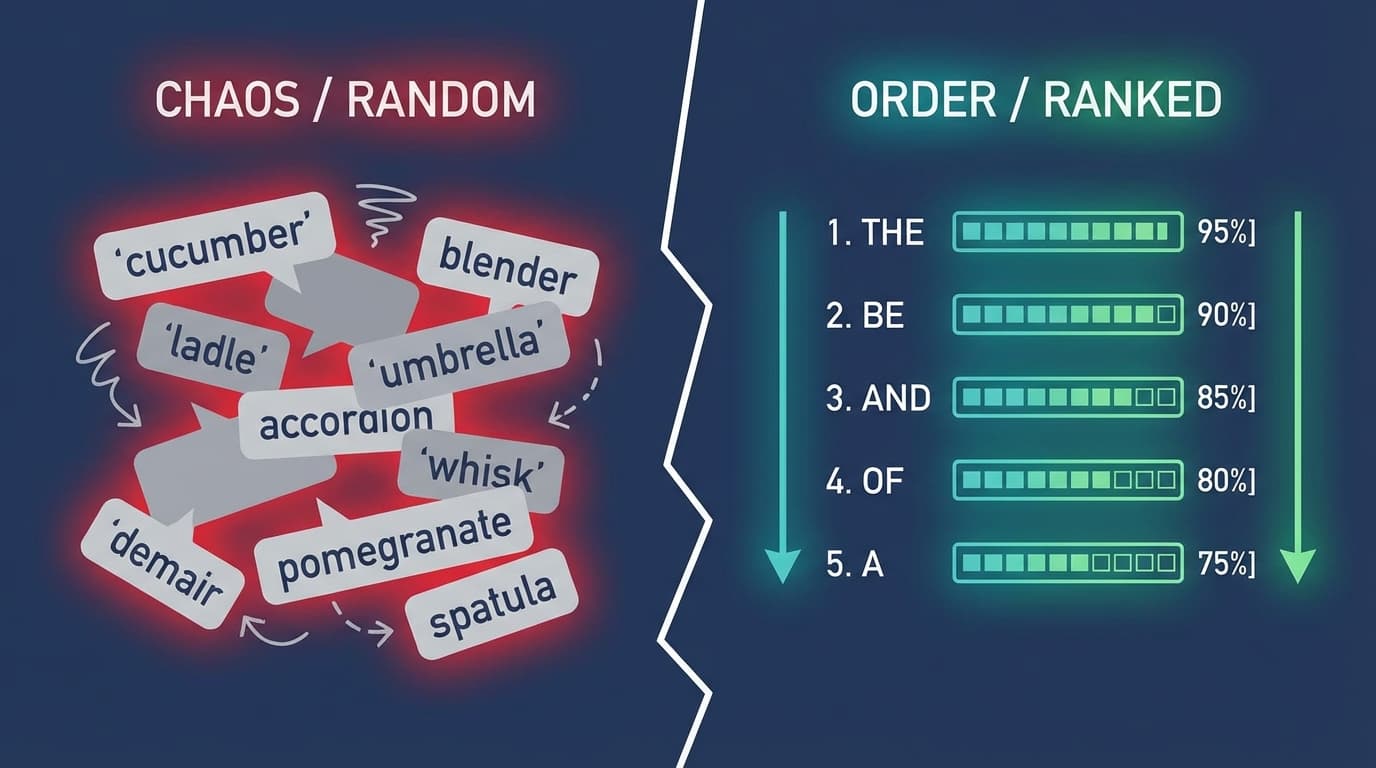
The ideal workflow: 1. Learn words by frequency (the most useful words first) 2. When the system detects you're confusing two characters — surface the lookalike group 3. Drill the contrast until the distinction is automatic 4. Move on — now that pair will never confuse you again
This is exactly how Insperium's leech + lookalike system works. When you repeatedly fail a word, the system identifies which character is causing confusion, finds its lookalike group (from our database of 744 groups), and presents them together with pinyin and meaning.
The Results
Learners who use contrastive character grouping show: - Fewer confusion errors on similar characters - Faster recognition speed when reading - Better retention because the distinctive features are encoded more deeply
The characters haven't changed. But the way you learn them makes all the difference.
The lookalike character database in Insperium contains 3,497 characters organized into 744 confusion groups, covering the most frequent characters in modern Chinese.