Open any language textbook and you'll find vocabulary organized into neat little themes: Food. Travel. Clothing. Sports. Hobbies.
It feels logical. It looks organized. And it's one of the main reasons language learners get stuck.
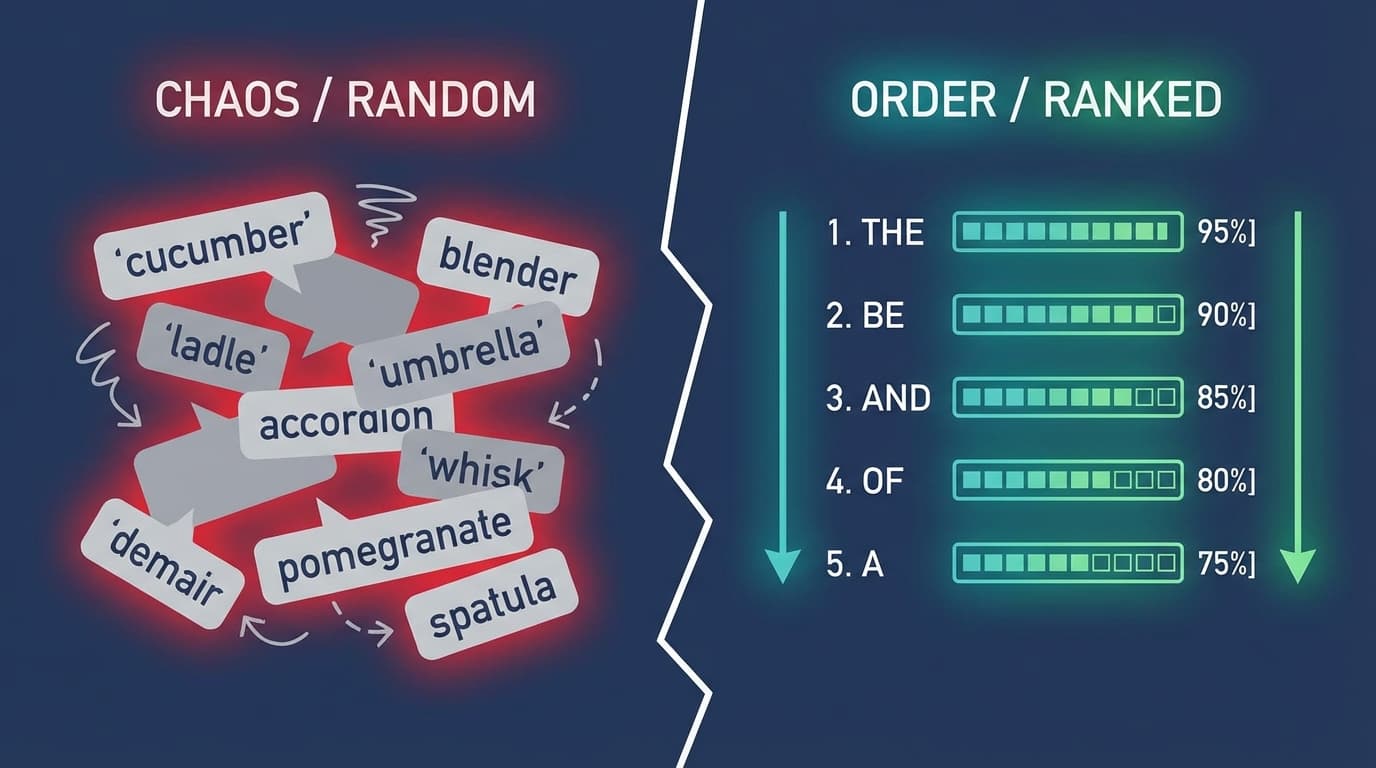
The problem isn't the words themselves — it's the order. Research in corpus linguistics shows that theme-based vocabulary ignores something fundamental: not all words are equally useful, and the difference isn't even close.
The Cucumber Problem
Imagine you're learning Chinese. Your textbook starts with a unit on food. By the end of week one, you've learned:
- 黄瓜 (cucumber)
- 搅拌机 (blender)
- 勺子 (ladle)
- 芹菜 (celery)
Meanwhile, you still don't know the words for "because," "want," "think," or "know."
This happens because textbooks organize by topic, not by usefulness. A word like 因为 (because) appears thousands of times more often in real Chinese than 黄瓜 (cucumber) — but the textbook doesn't care about that. It cares about finishing the food chapter.
From a frequency perspective, this approach is like learning to drive by studying the cigarette lighter before the steering wheel.
What Corpus Linguistics Revealed
The development of large language databases — called corpora — changed how linguists think about vocabulary.
Databases like the British National Corpus and SUBTLEX (which analyzes movie and TV subtitles) contain millions of real sentences. By counting how often each word appears, researchers can rank every word in a language by actual usage.
The results are striking: a small core of words appears constantly, while the vast majority of words are rare. This pattern (Zipf's Law) holds across every language studied.
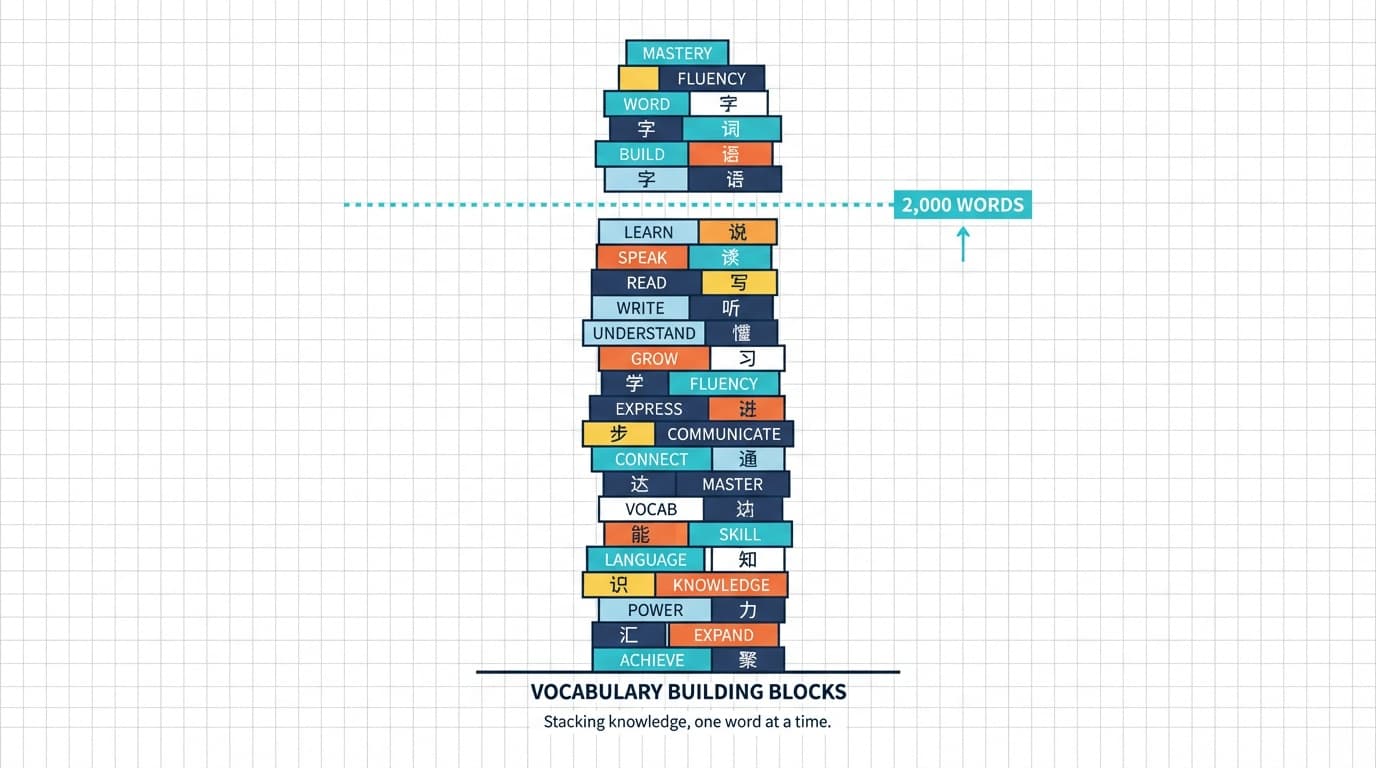
When you look at the top 2,000 words in any language, you're looking at the words that make up 85–90% of daily communication. The remaining tens of thousands of words split the last 10–15% between them.
Why Theme-Based Learning Is Slow
Thematic vocabulary has three problems:
1. It front-loads rare words. Kitchen utensils, exotic animals, and sports equipment are satisfying to learn but appear infrequently in real communication. You're spending hours on words you'll rarely encounter.
2. It skips the glue words. Function words — prepositions, conjunctions, auxiliary verbs, pronouns — are the structural backbone of every sentence. They're not exciting enough for a textbook chapter, but without them you can't form a single coherent thought.
3. It creates false confidence. You can name 30 vegetables in Chinese but can't say "I think we should go because it's getting late." Vocabulary breadth without structural depth is a dead end.
Frequency-Based Learning Fixes This
When vocabulary is ordered by frequency, three things happen:
Faster comprehension. The most common words are the ones you encounter everywhere — in conversations, signs, menus, TV shows. Learning them first means everything you read and hear becomes more understandable immediately.
Natural grammar acquisition. High-frequency words include the grammatical building blocks: auxiliary verbs, prepositions, pronouns, common verb patterns. By learning these first, you absorb grammar through exposure rather than memorization.
Compounding returns. Because frequent words appear constantly in real language, you encounter them over and over, reinforcing your memory without extra study time.
Learning Words Inside Sentences
Frequency ordering tells you which words to learn. But how you learn them matters too.
Research on collocations and formulaic language shows that words behave differently in context. "Make a decision" is natural English; "do a decision" is not — even though both use simple high-frequency words.
Learning vocabulary inside real sentences helps you absorb these patterns. You don't just learn what a word means — you learn how it's actually used.
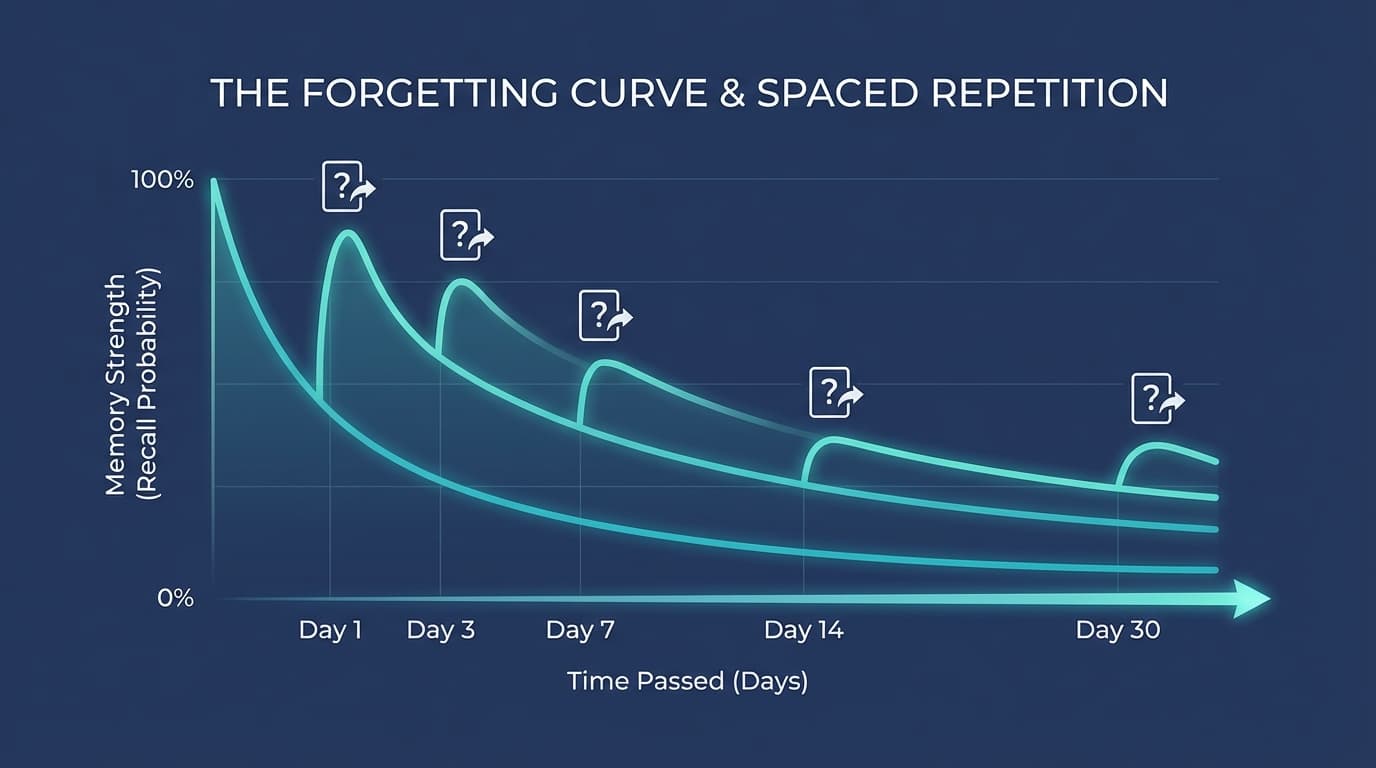
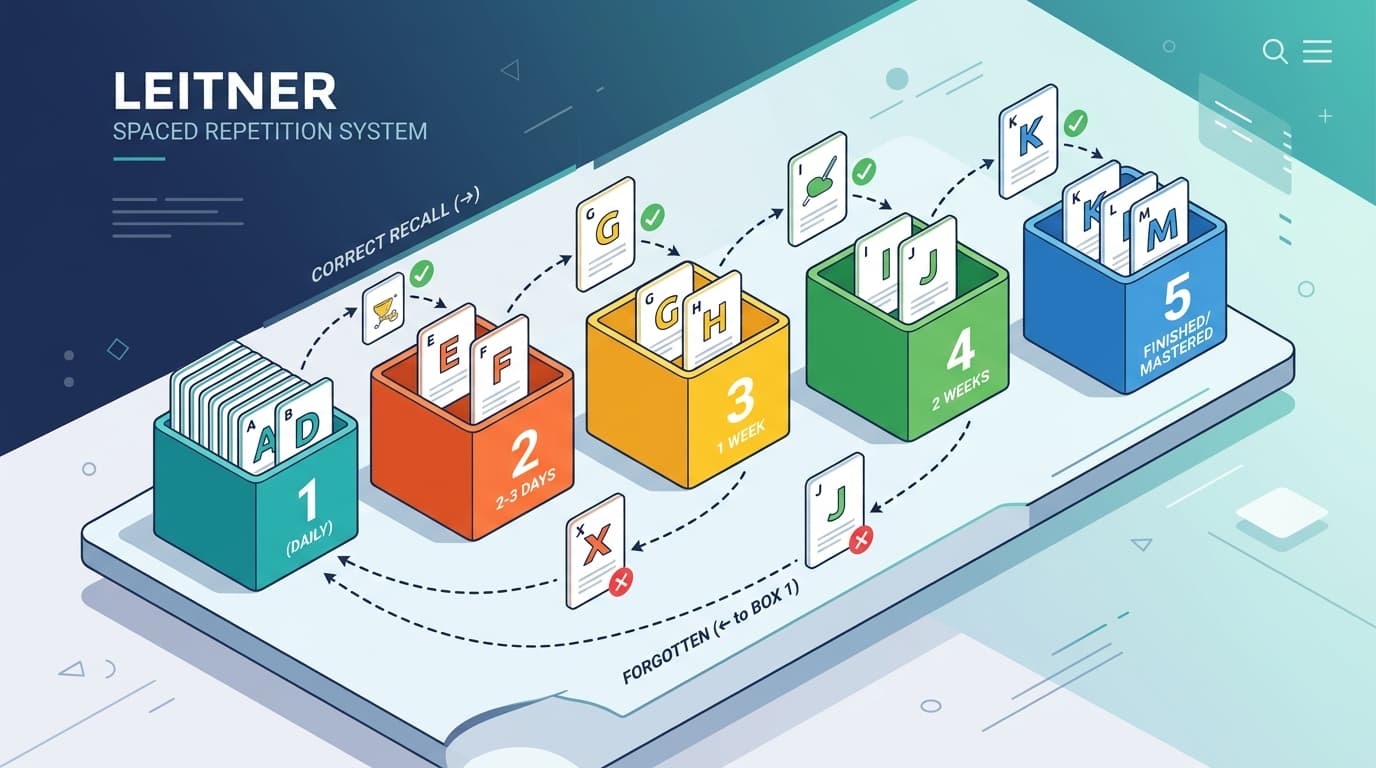
This is why the most effective modern systems combine frequency-ordered vocabulary with sentence-based practice and spaced repetition for long-term retention.
What This Looks Like in Practice
A frequency-based curriculum doesn't start with "food" or "travel." It starts with the words that appear in every topic:
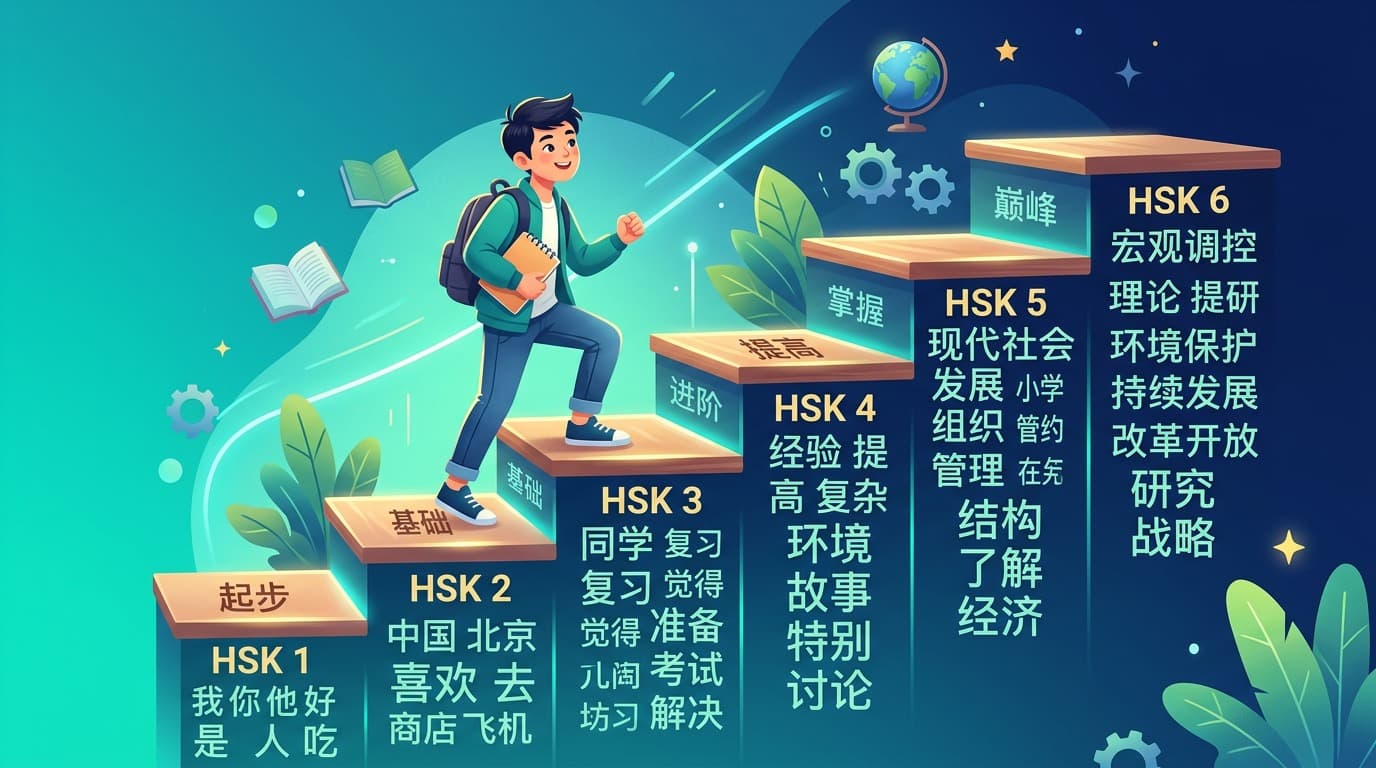
Week 1: The 75 most common words — basic verbs (be, have, go, want), pronouns (I, you, he), connectors (and, but, because), question words (what, where, when).
Month 1: The 300 most common words. You can understand simple conversations and read basic sentences.
Month 3: The 1,000 most common words. You follow everyday spoken language, recognize most of what you hear, and can express yourself in basic situations.
Every word you learn is one you'll actually use. No cucumbers until you need cucumbers.
How Getinsperium Does It Differently
Getinsperium's vocabulary system is built entirely on frequency data from the SUBTLEX-CH corpus — 33 million words of real Chinese media.
Every word has a frequency rank. Block 1 starts with the 75 most common words. Block 2 picks up where Block 1 left off. By the time you finish Block 10, you know the 750 most common words and can understand basic conversations.
Meanwhile, every sentence, story, and dialog in the platform only uses vocabulary from blocks you've already completed. Nothing is random. Nothing is out of order. You're always working with words you need, in a sequence that makes sense.
References
- Zipf, G. K. (1935). The Psycho-Biology of Language.
- Nation, I. S. P. (2001). Learning Vocabulary in Another Language.
- Nation, I. S. P. (2006). Vocabulary size and text coverage.
- Sinclair, J. (1991). Corpus, Concordance, Collocation.
- Wray, A. (2002). Formulaic Language and the Lexicon.
- Cepeda, N. J., et al. (2006). Distributed practice in verbal recall tasks.